
Mid-Major Prospect Preview: Potential Draftees Competing Under the Radar
These four mid-major prospects should be on draft radars as we enter the season, as well as being potential high-major transfer targets in the future

One of my favorite basketball-related topics is mid-major scouting, which is why I focused heavily on that level when I first began writing player-focused articles. Since then, I’ve pivoted most of my writing in a high-major direction, but I still think there’s plenty of value in scouting mid-major hoops. In this article, I’m going to cover four prospects who I think have professional futures, whether that be following a stint with their current team or after transferring to a more prominent program. I’m fairly certain that each of these players are good enough to compete against high-major competition, so it’s likely that I’m scouting them as future high-major contributors rather than soon-to-be NBA draftees. That said, I’m excited regarding each of their long-term outlooks, and I want to share that excitement with you all.
Roman Domon - Murray State
Sophomore - Guard/Wing - 6’9” - 225lbs
When French prospect Roman Domon re-signed with Murray State following a very promising freshman season, I was shocked to say the least. Obviously, the Racers put together a substantial NIL package to keep him from seeking greener pastures with a high-major program. He definitely had large offers on the table, as he was one of the better underclassmen in all of mid-major hoops last season, and he offers NBA potential in a pro-ready body. He only started 9 games during his debut campaign, as he backed up a talented upperclassman lineup, but his off-the-bench effectiveness was impressive to say the least. He posted averages of 14.2 points per game, 5.2 rebounds, 1.6 assists, 1.1 steals, and .1 blocks on shooting splits of 47.6% from the field, 36.8% from beyond the arc, and 76.8% from the free-throw line.
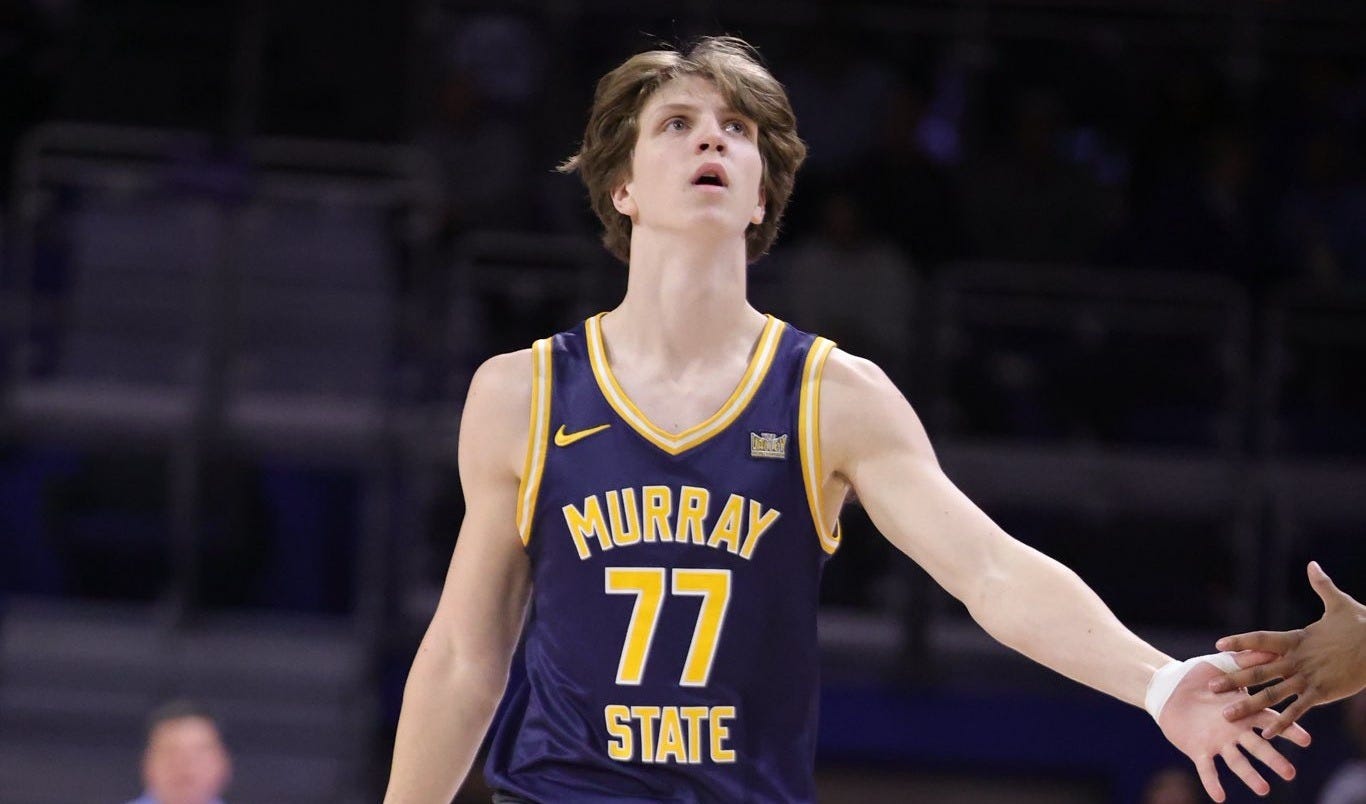
Photo Credits - Murray State University Men’s Basketball
Domon is so intriguing as an NBA prospect because his skillset is wildly advanced for a player of his size. Despite being built like a full-time forward, he’s a very real on-ball initiator who’s probably at his best playing shooting guard. Even then, he flashed real floor general upside throughout his freshman season, despite not boasting impressive assist numbers. This year, as the team’s starting two-guard, he’ll be given more opportunity to showcase the full extent of his all-around offensive acumen. While he did come off the bench last season, he played 25.3 minutes per game and found himself on the floor for most of the team’s clutch possessions. Hopefully he’ll near the 30-minute mark this season, increasing his shot volume in the process.
Speaking of shot volume, it’s important to recognize where Domon does his damage from and what he could do to improve his efficiency moving forward. He’s a real three-level scorer and doesn’t rely heavily on any individual scoring level. He’s a creative ball handler without a ton of acceleration, but his downhill driving was rather effective throughout the year despite athletic limitations. I’d argue that his shot creation upside is best illustrated by his mid-range work, as he attempts a wide array of shots from this level and converts those looks at a promising rate. Finally, he’s still developing as an outside shooter, and is probably better as an off-the-dribble shooter than he is on catch-and-shoot looks. I’d like to see him improve as an off-ball scorer, both as a play finisher and long-range marksman. This would further bolster his versatile offensive game, which is probably his most enticing long-term trait.
Domon isn’t a bad defender by any means, but he’s certainly more concerned with the offensive end, scoring in particular. His positive measurables and ability to defend multiple positions were important for the Racers this past season, and he’s a decent off-ball defensive playmaker, but he clearly has a handful of obvious flaws on this end. Because he plays rather stiff and straight up, he can struggle to move laterally with smaller guards. He’s also not strong enough to comfortably match up against true frontcourt players. Finally, his motor on this side of the court leaves much to be desired, as he regularly gets lost or simply loses his focus. In fact, he seems to still be maturing from a mental perspective across the board, as he can get down on himself on the offensive end as well. All in all, the hope is that another year of college experience will further mold him into the player I think he can be, an outcome that would allow him to make a smooth transition into either the professional or high-major ranks.
Nyk Lewis - VCU
Sophomore - Point Guard - 6’1” - 195lbs
VCU’s Nyk Lewis was an early adopter of the high-end recruit to mid-major powerhouse strategy as a result of the transfer portal and NIL ecosystem. He was one of the higher ranked point guards in the class of 2025 but decided to join the Rams rather than a long list of notable power programs as he searched for more opportunity and earning potential. He put together a strong freshman season, operating as the team’s third option on the offensive end and their premier point-of-attack defender, eventually deciding to stay with the program following the departure of primary option Terrence Hill Jr. Because of Hill’s decision to leave the program, Lewis will now be thrust into a more prominent role for one of the better mid-major programs in the country. Surely, this will place him atop the mid-major player rankings as he progresses through his sophomore season.
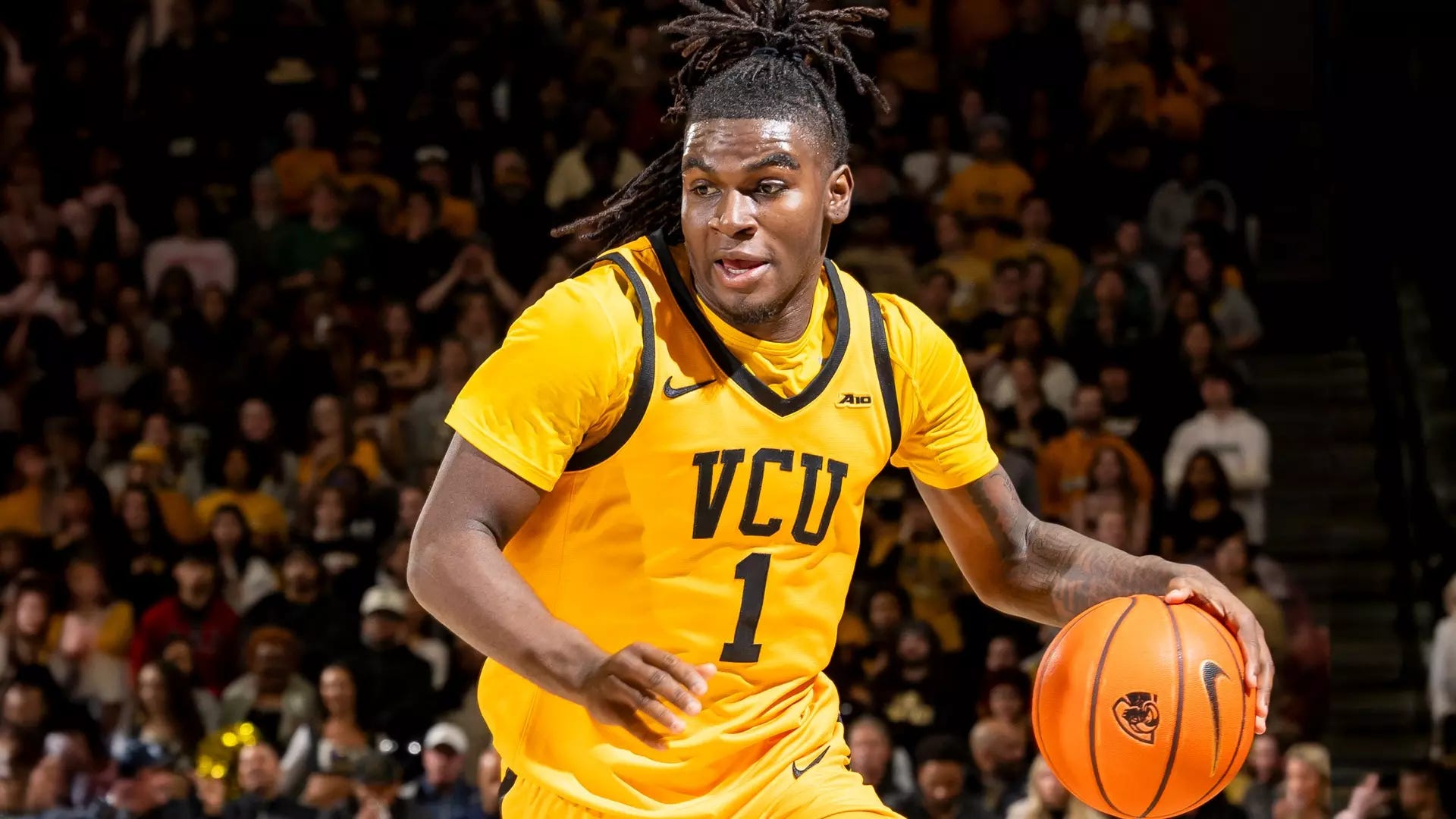
Photo Credits - VCU Athletics
Lewis started all 35 of VCU’s games during his freshman season before an injury knocked him out of their NCAA tournament second-round matchup with Illinois. He averaged 8.7 points per game, 4.5 rebounds, 1.6 assists, and 1.1 steals on shooting splits of 40.8% from the field, 36.2% from the three-point line, and 74.8% from the charity stripe. He’ll likely be the team’s go-to option this season, as he’ll be asked to step into a true point guard role after playing as a combo guard throughout his freshman campaign. To prove himself as an NBA prospect, he’ll have to take a positive step forward as a scorer and passer while maintaining his defensive effort. He is a shorter player, but his strong and stocky frame do make up for some of his physical limitations. He could probably afford to lose a few pounds in an effort to further expand his speed advantage, but he’s already a very quick player on both ends.
Offensively, Lewis was solid during his freshman season, but he wasn’t worth writing home about on most occasions. However, he did flash his scoring upside in a few games, and if he can extend those performances through an entire season, we could be looking at one of the biggest offensive leaps in the country. He’s a solid downhill driver and under- and around-the-rim finisher, but I wouldn’t categorize him as an elite interior scorer. His mid-range game could also use some work, as a better pull-up jumper and floater/push-shot would put more pressure on defenders and allow him to score around the rim at a stronger rate. His outside shot was promising this season, and I’m curious to see if he can push his percentage closer to the 40% mark while increasing his volume. Finally, I want to see him take a major step forward as a passer and all-around floor general. At his size, he won’t be able to make an NBA leap if he isn’t a true all-around playmaker.
Lewis’s defensive game kept him on the floor at points during his freshman season, and I think he’ll continue wreaking havoc on this end this upcoming year. Because of his strength and agility, he’s able to defend the point of attack incredibly well, generating most of his steals as an on-ball defender. He’s not overly switchable because of his height, but he did showcase his ability to read passing lanes and time off-ball steals at times this past year. I would like to see him be more aggressive on this end, as he rarely commits fouls, but regularly sacrifices steal opportunities in the process. He’s a very strong positional rebounder, a trait I expect to improve this season as he runs VCU’s offense, as he’ll be able to grab boards and push the pace himself. He certainly has less to work on as a defender than he does as an offensive operative, but perhaps he could try his hand at secondary rim protection to further strengthen his overall defensive playmaking package (a lot to ask of a shorter guard).
Chamberlain Burgess - Weber State
Sophomore - Forward - 6’9” - 195lbs
Weber State commit Chamberlain Burgess was one of my favorite underrated recruits from the 2025 graduating class, and he’s had an interesting path up to this point. The former four-star recruit originally committed to BYU, but was to embark on a two-year mission before joining the program. However, and for whatever reason, his mission ended early and he was rostered by Snow College, a junior college program, in the Fall. My best guess was that this rostering was an effort by BYU, who had already filled his roster spot, not expecting him for two more years, to keep him in basketball shape throughout his true freshman season. What’s weird to me is that he decided to join Weber State instead of BYU following the season, likely because opportunity with the Cougars wasn’t there like it would have been had he spent two years abroad as previously planned. Now, he should be able to fully flex his intriguing skillset with the Wildcats, as he’s a real high-end prospect playing for a program that typically doesn’t attract that level of pedigree (at least, from the high-school ranks).
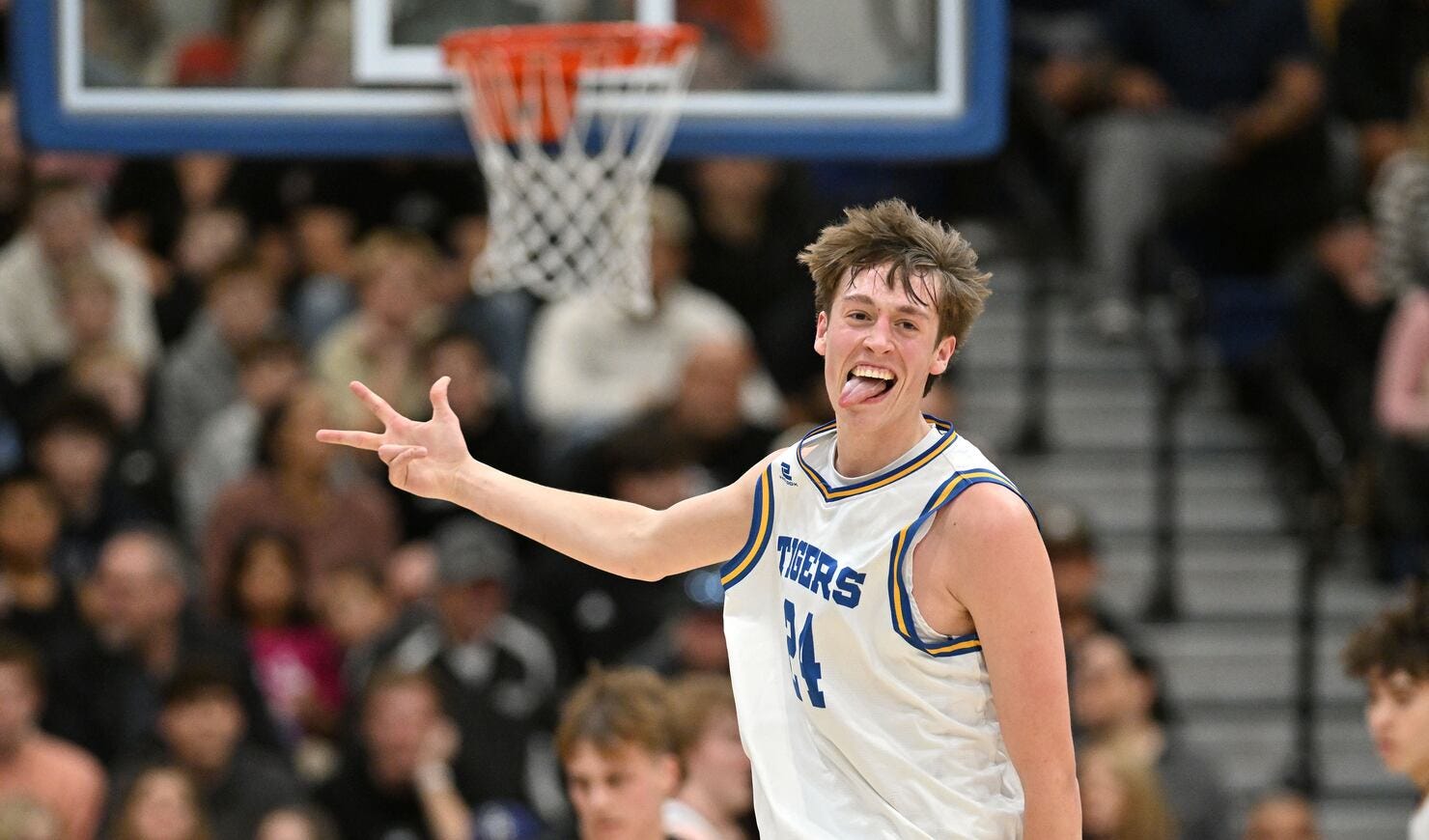
Photo Credits - Scott G. Winterton/Deseret News
Burgess is a lanky forward with real multi-level scoring acumen and a versatile defensive presence. He was one of Utah’s top players during his time with Orem, and I think he would have been a legitimate contributor with BYU. However, he would have been an ancillary piece for the Cougars as the program attempts to further cement their presence in the NIL era. For Weber State, he’ll likely be asked to be a starting level mainstay, and perhaps the team’s best all-around player. From an opportunity perspective, this is a good thing for Burgess, who’ll be able to re-emerge on the scene after most evaluators forgot about him entirely. That said, there’s a world where this experiment doesn’t go as planned, as I view Burgess as a role-playing tertiary option instead of a go-to guy. That’s not to say he isn’t an NBA prospect; I think the league is always looking for guys who can slot into roles and perform at a high level, but I’m curious to see how his role translation looks like with a mid-major program that may need more from him.
During his high school career, Burgess wasn’t stuffing the stat sheet as a scorer. However, he’s a real three-level scorer with volume-based upside. While his size and length are his primary positive traits as an interior scorer, it’s worth noting that he’s also quite athletic. He’s a very real lob threat and capable off-ball play finisher who would thrive alongside a pass-first floor general. The mid-range is his worst scoring level, but he did showcase flashes of pull-up jump shooting and soft touch shot making during his prep career. Improving his floater and push shot would pay major dividends for his all-around scoring acumen, but those shot types aren’t make or break for his overall offensive game. His outside shot is probably where he’s most intriguing as a professional prospect. He’s a legitimate long-range marksman and catch-and-shoot threat, traits that add another layer to an already very promising off-ball scoring package. Ancillary traits such as ball movement and offensive rebounding likely won’t be a major part of his game, but there’s a world where he emerges as a solid offensive glass cleaner if he can add weight to his frame.
His defensive game is rather simple, but effective, nonetheless. He was a very strong primary rim protector at the high school level, as his combination of size, length, and athleticism was simply too much to handle for most of his prep opponents. That said, he’s probably not big or strong enough to play this role at the collegiate level and will instead be asked to play a secondary rim protector role. Now, he’ll be tasked with more perimeter defense assignments as he matches up against small and power forwards rather than centers. I think he’ll be fine with this, even if there are some growing pains, as he’s a rather agile player for his size. He’s certainly not as heavy-footed as you’d expect from someone who played a traditional rim protector role over the course of multiple seasons. A focus on gaining weight and adding muscle would further strengthen his game on both ends and allow him to play as a full-time power forward, his natural position.
(Check out my film deepdive on Burgess, linked to his name in this article)
Jake Hall - New Mexico
Sophomore - Shooting Guard - 6’4” - 200lbs
The last player I want to talk about is New Mexico’s Jake Hall, a player I’m surprised to see continue his career at the mid-major level. As a freshman, he was one of the best three-point shooters in the country, but he also cemented himself as one of the craftiest three-level self-creating wings at any level of the college game. There’s no doubt in my mind that he’s offensively gifted enough to succeed with a high-major program, yet he decided to spend his sophomore season with the Lobos. I believe his decision will pay off, as I expect him to be one of the nation’s leading scorers this season, and I’m curious to see in what areas he improves on both sides of the court. In that stellar debut campaign, Hall averaged 16.4 points per game, 3.2 rebounds, 1.6 assists, and .8 steals on shooting splits of 47.9% from the field, 43.8% from beyond the arc, and 80% from the free-throw line.
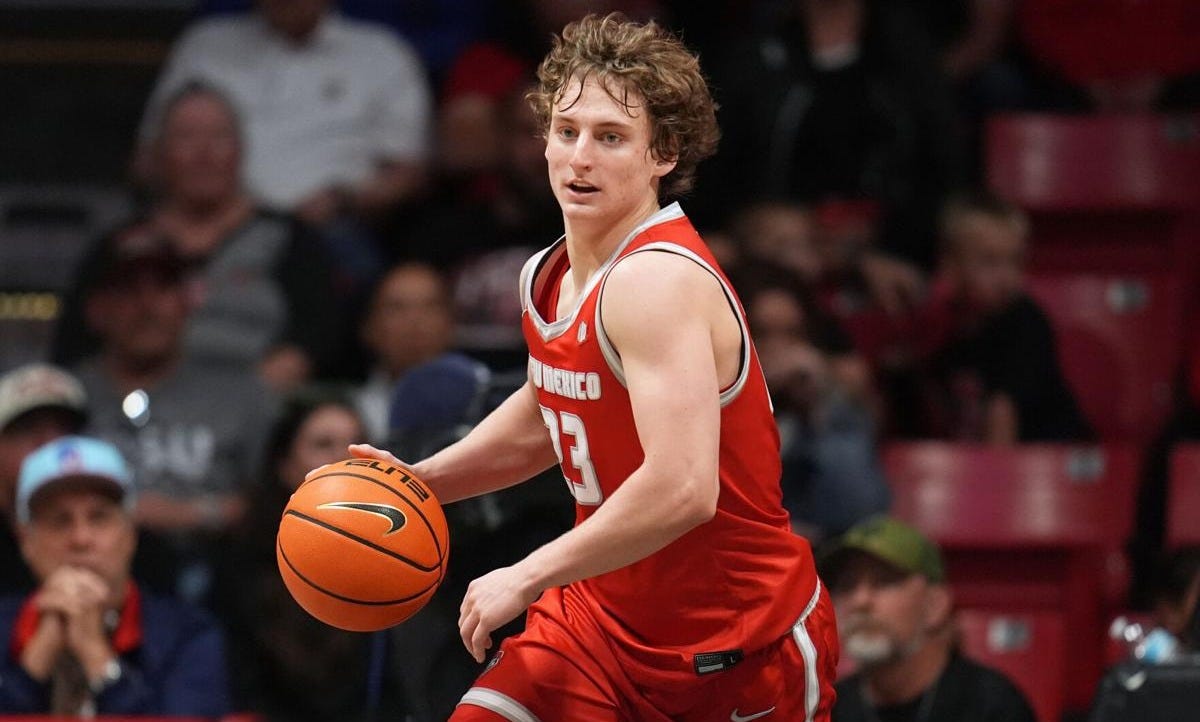
Photo Credits - Gregory Bull/Associated Press
Hall’s game is founded on finesse and high-level shot making, and I’d argue that he’s better on the ball than most underclassman shooting guards. His comfort on the drive despite not being the quickest player is eye-catching, as he’s able to rely on his deep bag of dribble moves and creative footwork to get to his spots all around the court. That said, his outside shooting, which is his strongest skill, is probably better when he’s working away from the ball. This gives him a versatile scoring package that makes him incredibly difficult to guard despite not being a standout athlete. If he continues to shoot over 40% on high volume (he attempted 7.2 threes per game last year), I could see him making the professional leap without having to move up to the high-major level. If not, he’ll command a hefty asking price on the transfer market as he likely looks to take a step up and attract more attention for his upperclassman seasons.
He most valuable on the offensive end, and I really do think he’s one of the best pure scorers at the mid-major level. He’s a very real ball handler and self-creator, utilizing an incredibly creative dribble package to break into the paint before using impressive footwork to create easy finishing angles once he gets there. He’s a very smooth operative from the mid-range, as his traditional jumper and floater are both legitimate weapons for him. Then you have his outside shooting, where he’s truly elite. I mentioned earlier that he’s probably at his best off-the-ball, but that’s not to say that his shot-creation skill doesn’t extend to this range. His step-back three is a big-time weapon, and he’s able to create quite a bit of space with his handle and twitchy movement. However, his ability to release catch-and-shoot attempts the second they hit his fingers is his most pro-ready offensive trait and something that the Lobos should take better advantage of this upcoming season. He certainly could improve as a passer and off-ball mover, but his scoring game is relatively unflawed besides his lack of above-the-rim athleticism.
While Hall is an excellent scorer, he’s not quite as effective on the defensive end. His lack of elite athleticism and strength does keep him from making a significant impact as an on-ball defender, and his lack of length and defensive instincts keeps him from being a legitimate difference maker as an off-ball defender. He’s probably at his best when defending on-ball two-guards and wings, as they’re more comparable to Hall from a speed perspective. He is a stocky guy who can hold his own from a strength perspective, which does allow him to occasionally switch onto bigger forwards for segments of a possession. At this point, all he can do to take a major leap on this side of the court is to play with more effort, strengthen his overall motor, and mature from a defensive IQ perspective. I’d like to see him work harder on the glass, as he’s just average as a positional rebounder. With all of that said, he’s definitely not a true negative on the defensive end, which means he’s a serious net positive due to his high-octane offensive output.
Because there are so many talented mid-major prospects who don’t get the attention they deserve, I hope to write a few more of these articles before the season begins. I also want to write a few individual-focused player deepdives for some of my favorite mid-major prospects (perhaps even a couple of these guys). In reality, it’s far more likely that the upperclassmen get draft attention throughout the season, whereas these players are more likely to be targeted by high major programs. That said, we’ve seen underclassman mid-major prospects be selected in recent memory, and I’m hopeful that a few of these names will get draft love before the cycle comes to an end. Be sure to subscribe to Hoops Sicko so you don’t miss out on any of my mid-major player scouting and team coverage.